


Why Handwriting Still Matters
#WholeSchool
Why Handwriting Still Matters
With digital tools everywhere, why are we still using chalk and paper in classrooms?
At Te Mata School, handwriting remains an essential part of our learning journey - not just for neat writing, but for developing the strong foundational skills that help students thrive in all areas of learning and are key for brain development. Across the school, we integrate handwriting into our daily routines in ways that match each age and stage of development:
In Kororā Kids (Year 0), students practise handwriting on blackboards using small pieces of chalk. This provides tactile feedback and strengthens correct grip.
In the Junior School, handwriting is taught throughout the day - from large group lessons on the mat using whiteboards, to small group sessions with teachers writing in their books. Ensuring there are multiple opportunities to practise is key.
In the Middle School (and Year 2), handwriting is taught alongside our Code Spelling programme, with teachers modelling correct formation.
In the Senior School, handwriting is timetabled every day from Monday to Thursday, with a strong focus on posture and fluency.
We use a range of engaging resources - chalkboards, whiteboards, and 'The Write Lessons' video series - to support explicit teaching across all levels. In the senior classes, students also begin structured touch typing lessons using online platforms such as typing.com. While handwriting and typing may seem like separate skills, they serve different and complementary purposes. Handwriting supports memory, language development and fine motor skills. Typing builds digital fluency, efficiency and organisation, both are vital for today’s learners.
Our students love the variety. A Year 4 student said, “When I write letters on the whiteboard, it helps me remember how to do them.” A Senior School student shared, “It’s really helpful watching the video lessons - it shows me exactly how to link my letters properly.” Another senior student added, “I like correcting the sentences and seeing how much neater my writing is now. We do linking, not printing.”
Teachers agree, Whaea Nikita from the senior team said, “It’s amazing to see how handwriting practice builds focus and pride in presentation. The Write Lessons have made a huge difference.” Teachers also report noticeable gains in letters per minute, accuracy and neatness. Across the school we are working on developing a shared language where teachers use precise prompts - like “hook around, small down” for the letter a, or “tall down, roll around” for b, to build confidence and consistency.
Recent research from the Ministry of Education (2025) reinforces the value of daily, explicit handwriting instruction. It notes that when handwriting becomes automatic, children are more able to focus on idea generation, spelling and deeper thinking - skills essential to writing fluency. Importantly, the act of handwriting (more so than tracing or typing) activates brain pathways involved in both reading and memory. This means students are more likely to remember and apply what they’ve learned when they write letters by hand.
Steve Graham, a leading handwriting researcher, puts it simply: “Handwriting fluency still accounts for over 40% of the quality of students’ writing through the primary years.” Without handwriting fluency, young writers often struggle to get their thoughts down, resulting in frustration or avoidance. By investing just 10–15 minutes a day, can make a profound difference in both confidence and achievement across the curriculum. Helen Walls (2021, The Writing Teacher) emphasises that the physical act of writing remains key in developing not only literacy but also motivation, self-belief, and identity as a writer.
So what can you do at home to help?
1. Pencil-and-Paper Time:
A few minutes of writing each day makes a big difference.
2. Try Chalk or Whiteboards:
Using different surfaces builds motor memory and grip strength. https://thehappyhandwriter.com/why-a-multi-sensory-handwriting-curriculum/
3. Use School Prompts:
Say things like “hook around, small down” for ‘a’ to match classroom language.
4. Check Posture and Grip:
Feet flat, back straight and a tripod grip helps with control.
5. Praise Neat Work:
Focus on clear letters, not speed. Celebrate their best-formed letters.
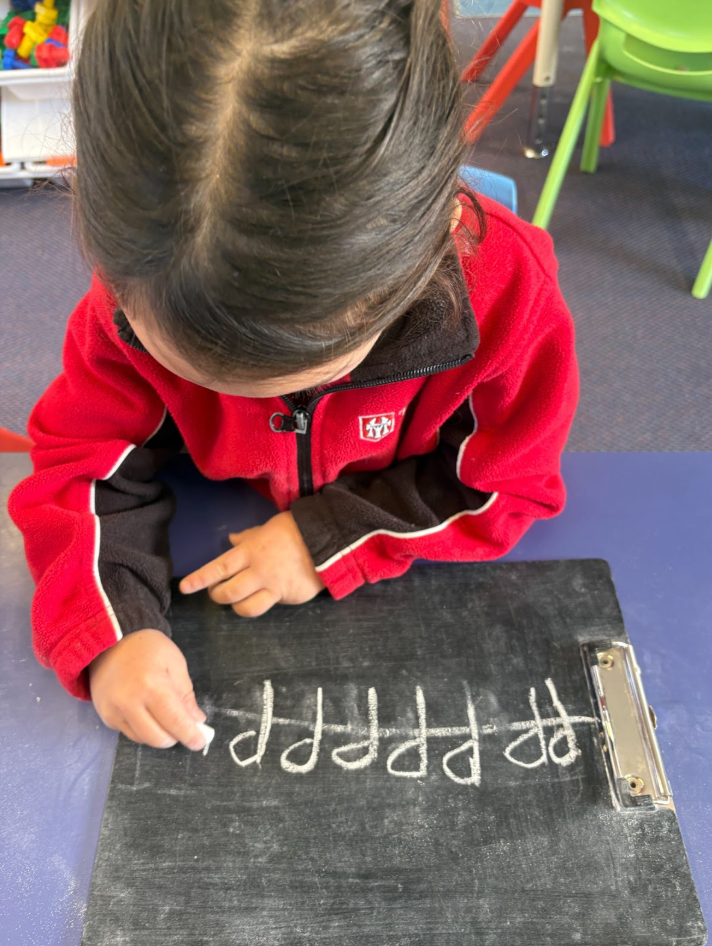
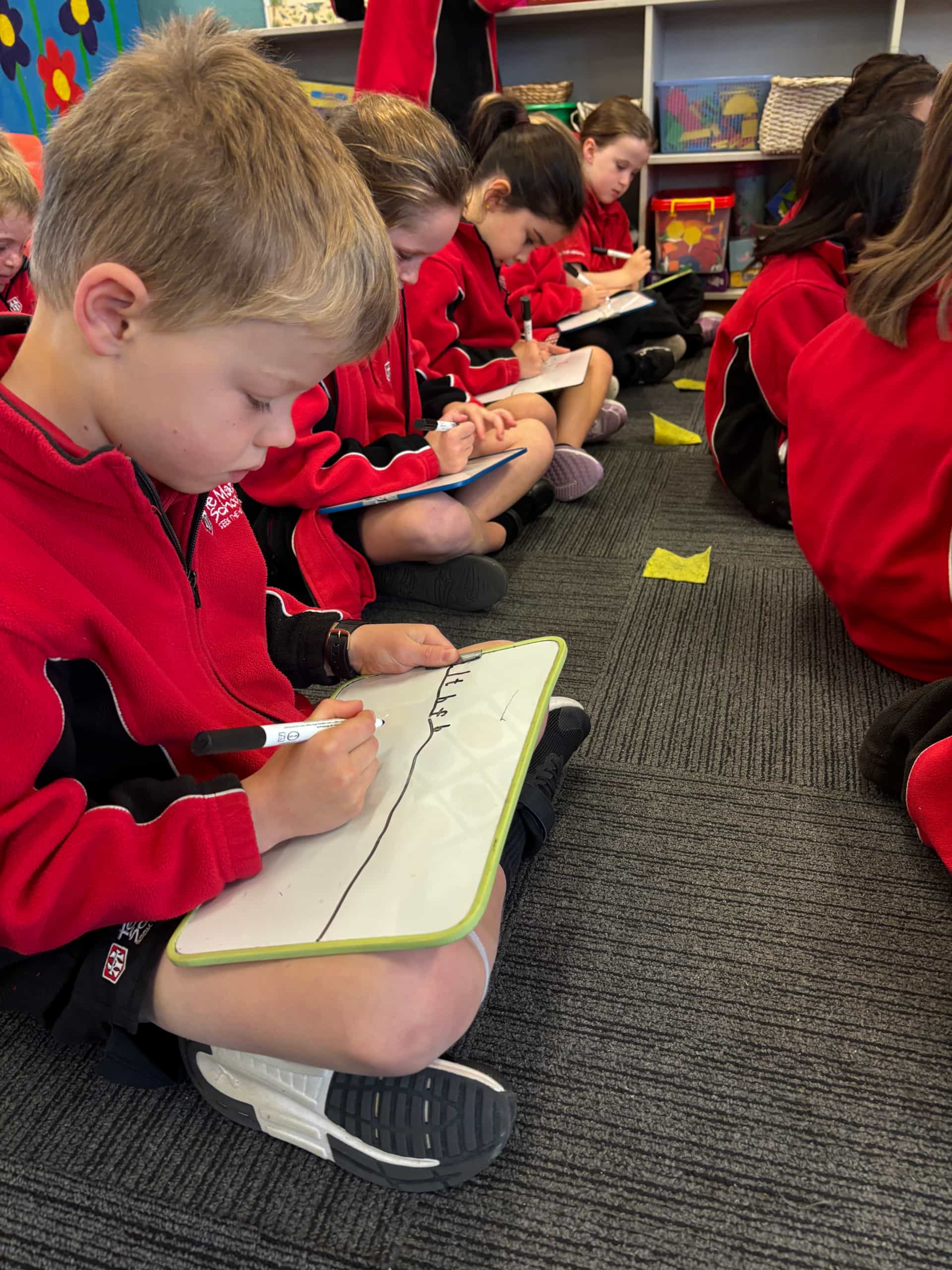
Year 0 - students thrive through the use of multi-sensory approaches
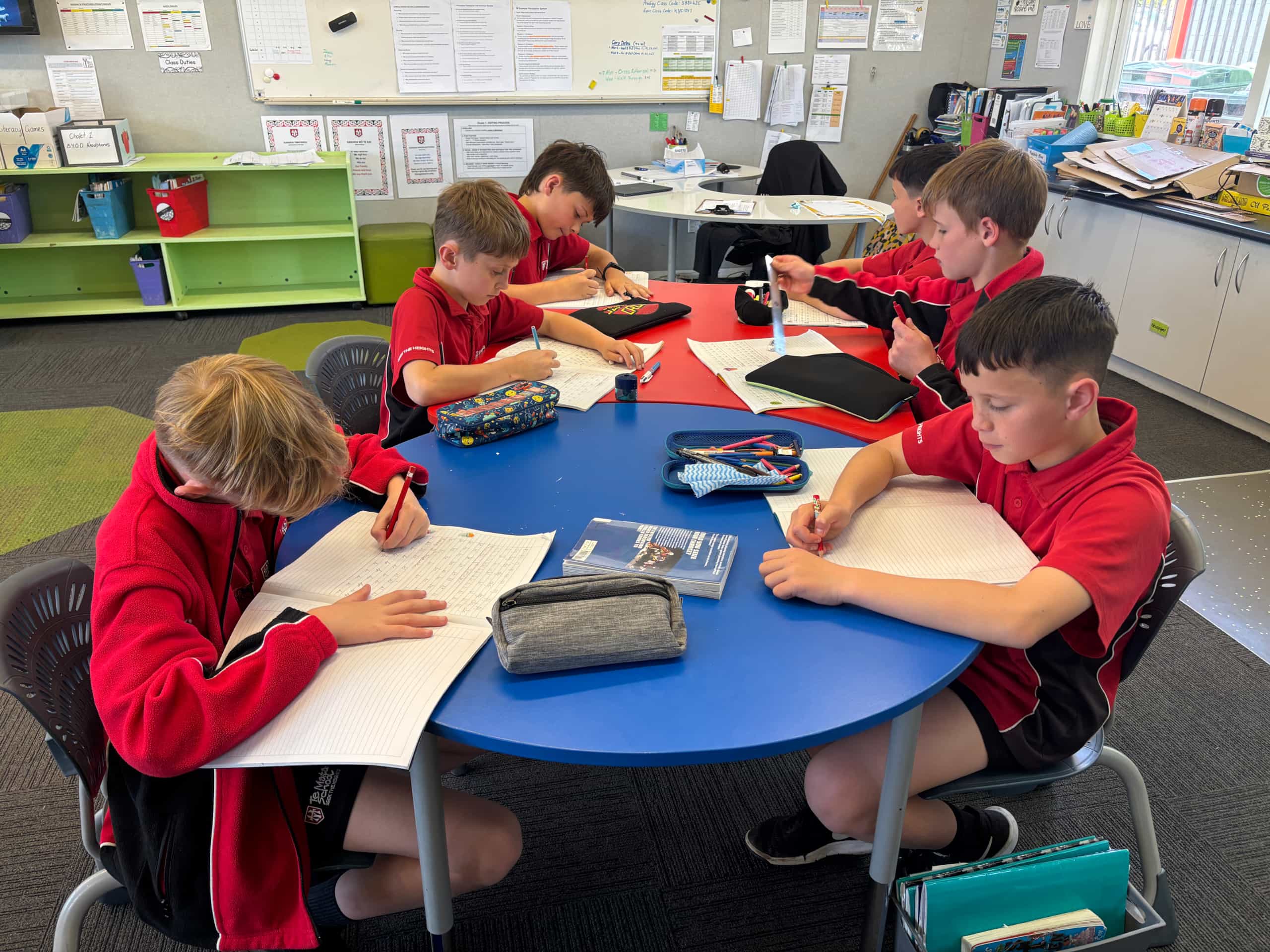
Good posture is needed for improved handwriting technique.
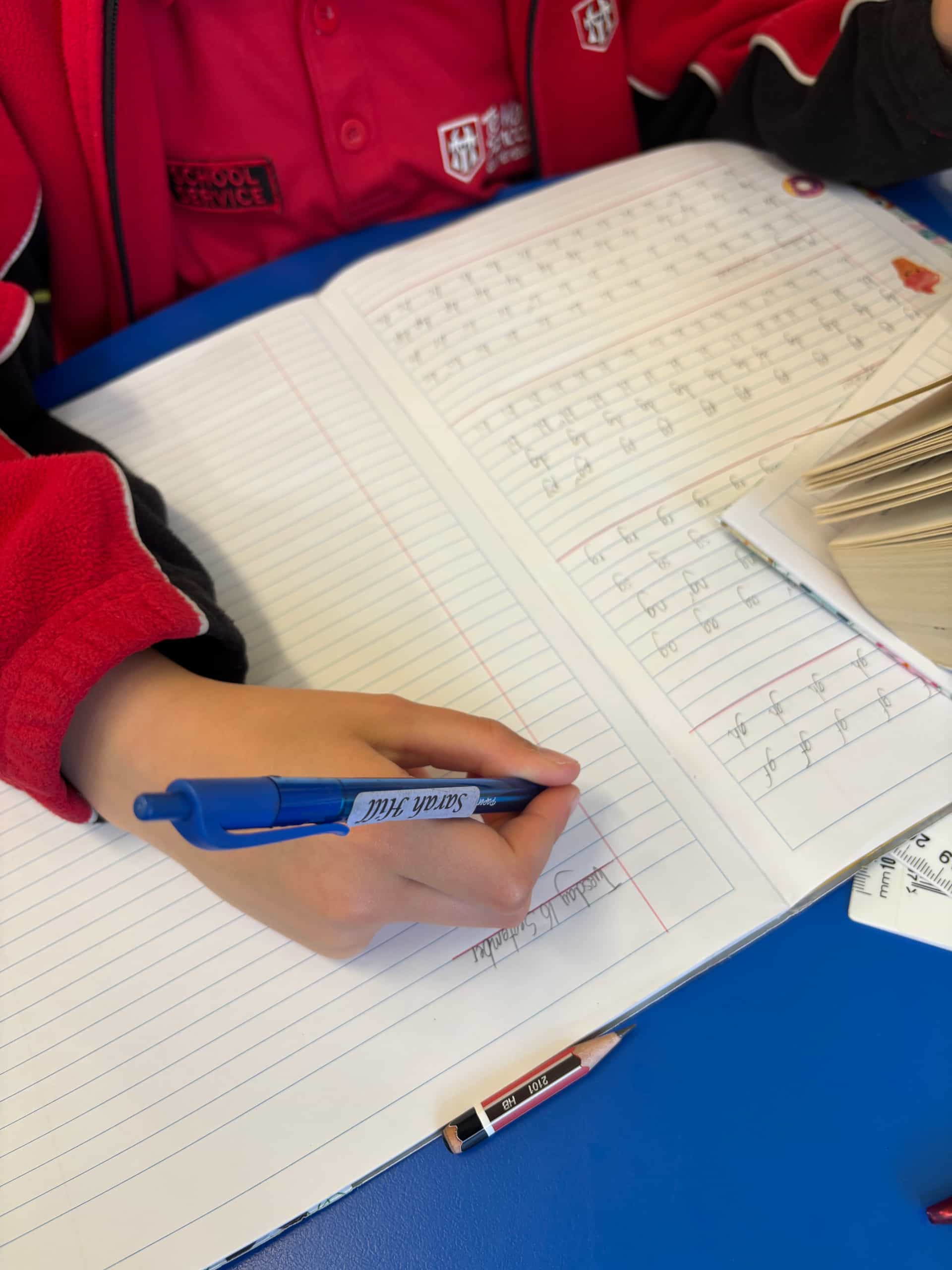
Correct grip is key.
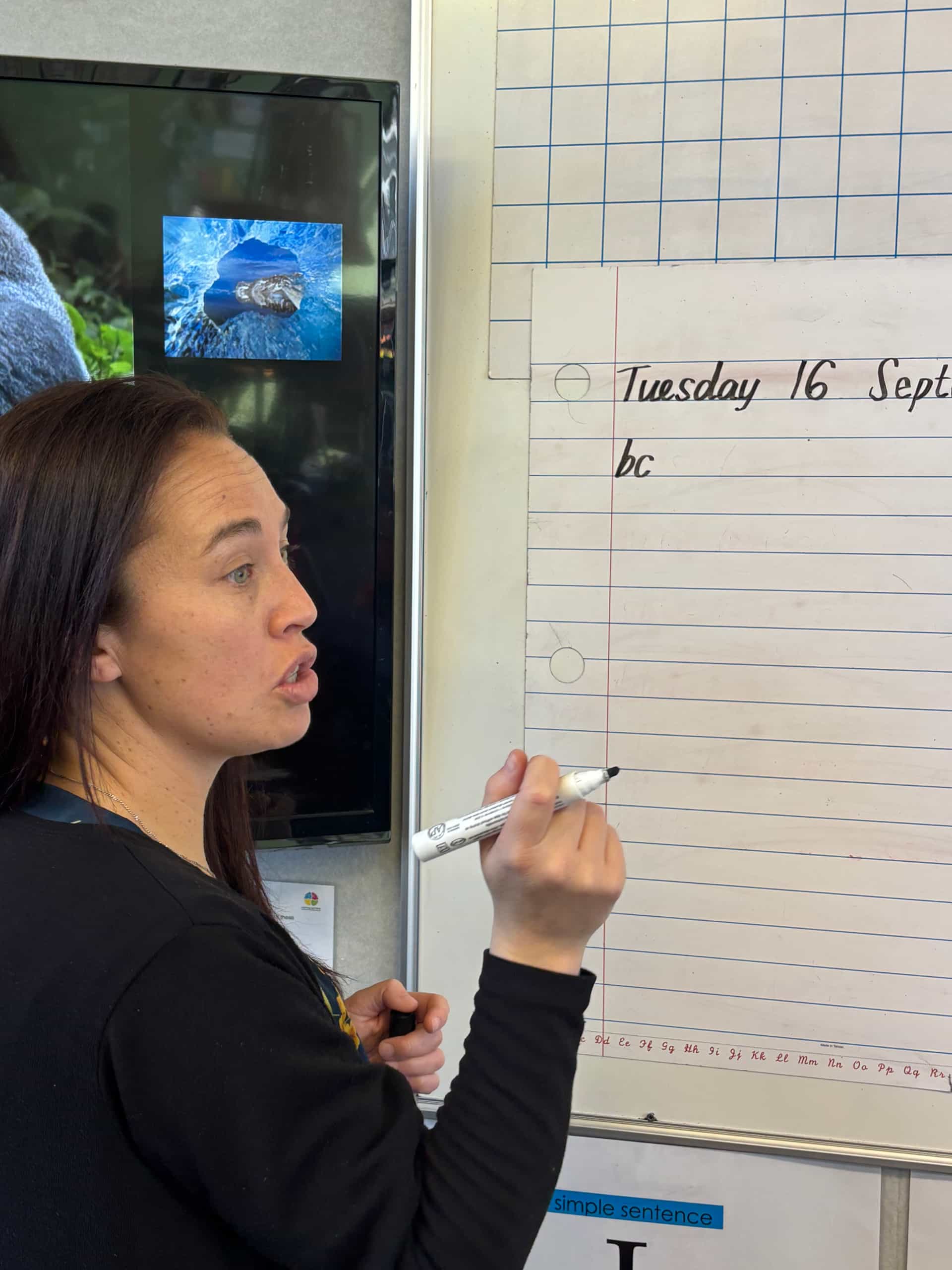
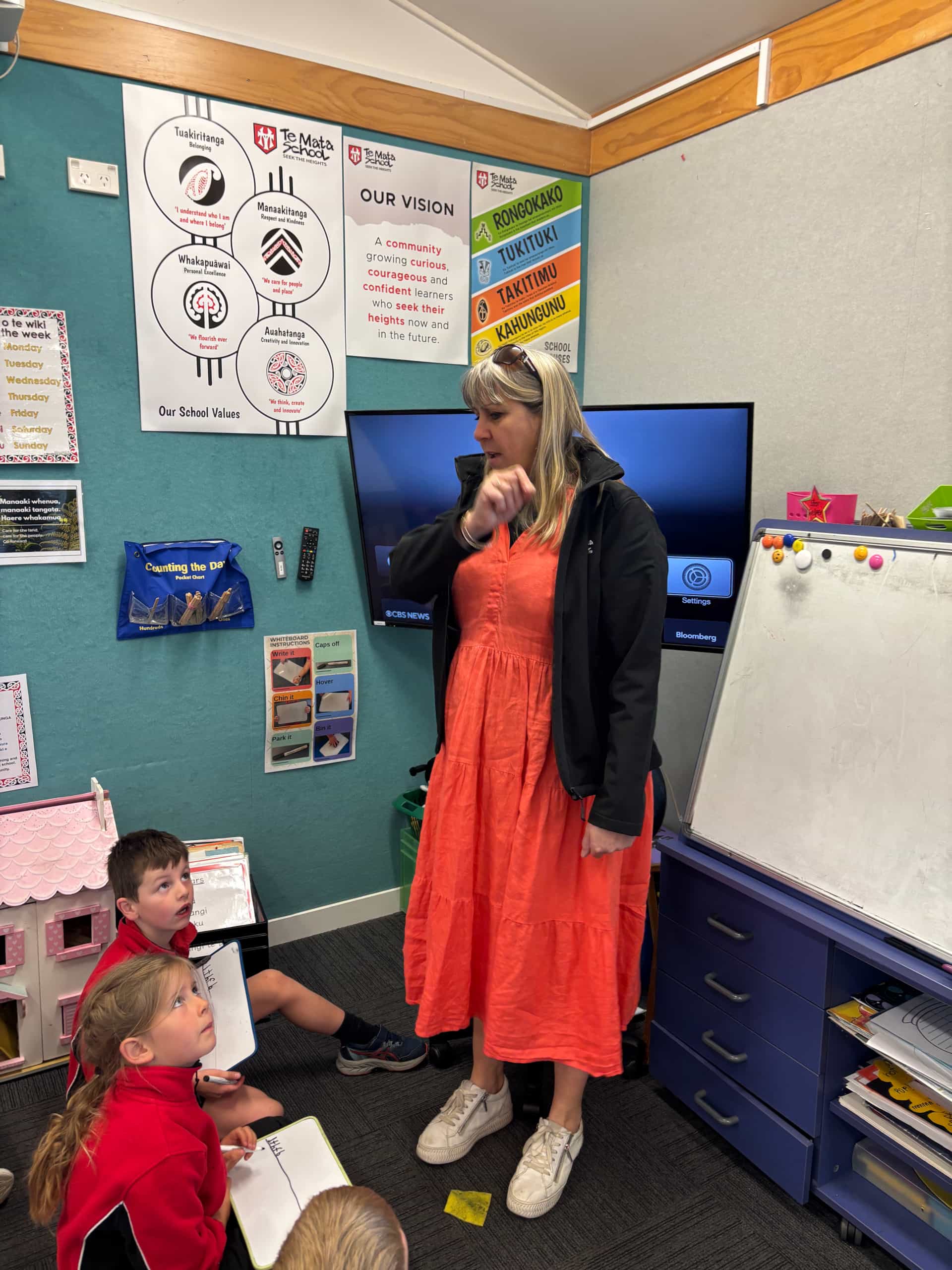
Teachers explicitly modelling what is expected.