


Together We Thrive - Composite, Collaborative!
#Middles&Seniors

Check out our video, click the image above:
What happens when learners and teachers come together as one learning community?
Our Year 3/4 and Year 5/6 classes are composite in structure and collaborative in approach, offering learners the benefit of a broader range of teaching that is tailored to their specific needs. These classes provide the consistency, care, and calm of a close-knit community while allowing teachers to explicitly teach the curriculum goals (or ‘teaching statements’) relevant to each year level.
Although collaborative in nature, the classes often operate as two separate teaching spaces, with small-group and whole-group instruction clearly aligned to specific learning priorities. Differentiation occurs naturally, with children working at the level they need. This means learners are taught what they need to learn. Compared to a traditional classroom with just one teacher and one year group, our collaborative composite spaces give children way more flexibility, stronger relationships, and smoother transitions as they move through the years. With two teachers working collaboratively, there's always someone who knows your child well—and that means learning keeps ticking along, even if one teacher is away.
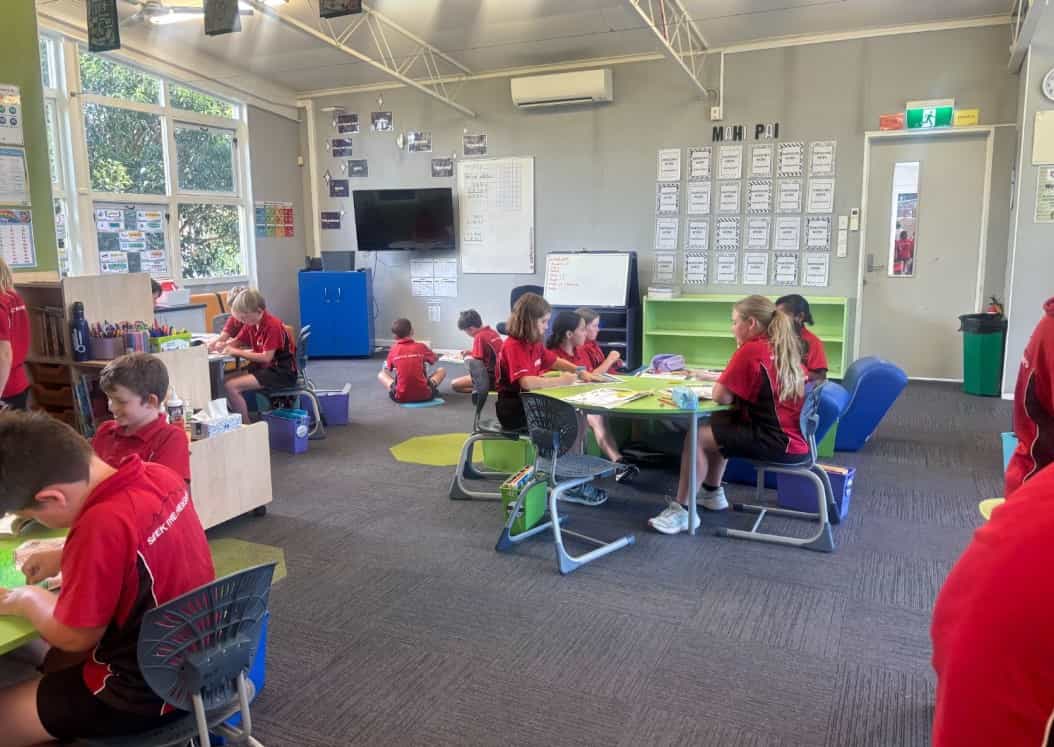
Children in our composite, collaborative spaces spoke proudly about how learning looks and feels:
“We’re always with someone we know. It makes it easier.”
“There are always groups - we are never just one whole large group. We split into sides and teachers take small groups.”
“We mix up lots—like for P.E, Library, Inquiry. It’s fun doing things with lots of people.”
“It’s calm and respectful.”
“Mistakes are important—our teachers model that all the time.”
“We write or glue our learning goals into our books—we know what we’re working on.”
“It’s good having more than one teacher—they say things in different ways, and sometimes that helps me understand better.”
“If one teacher’s away, the other knows us already, so we don’t have to start all over again.”
A key part of our success in collaborative learning spaces is the two-year loop model. Staying with the same teacher over two years allows learners and teachers to build deep, trusting relationships—an important foundation for wellbeing and academic growth. While some learners may change teachers as needed, the majority benefit from consistency and continuity. This also means less time spent adjusting to new routines and expectations at the beginning of each year. In turn, learners feel more confident, and teachers are better able to personalise learning from day one. One child explained, “It was good not having to figure out stuff like where to put your books at the beginning of the year.”
At Te Mata School, we’re proud to be growing our collaborative culture across classrooms, syndicates and the wider school. As part of our Strategic Plan, our goals of Collaborative Learning Teams and Collaborative Community Culture shape how we design learning experiences to be inclusive, connected, and responsive. You’ll see this in action in our composite class models, where Year 3/4 and Year 5/6 learners work together across a flexible space, guided by multiple teachers. With calm environments, clear routines, and strong relationships, we are building a culture that values every learner’s voice, maturity level, learning and pastoral care needs. This collaboration also feeds into our wider strategic goals of building learner agency, strengthening assessment capabilities, and ensuring our localised curriculum helps children thrive.
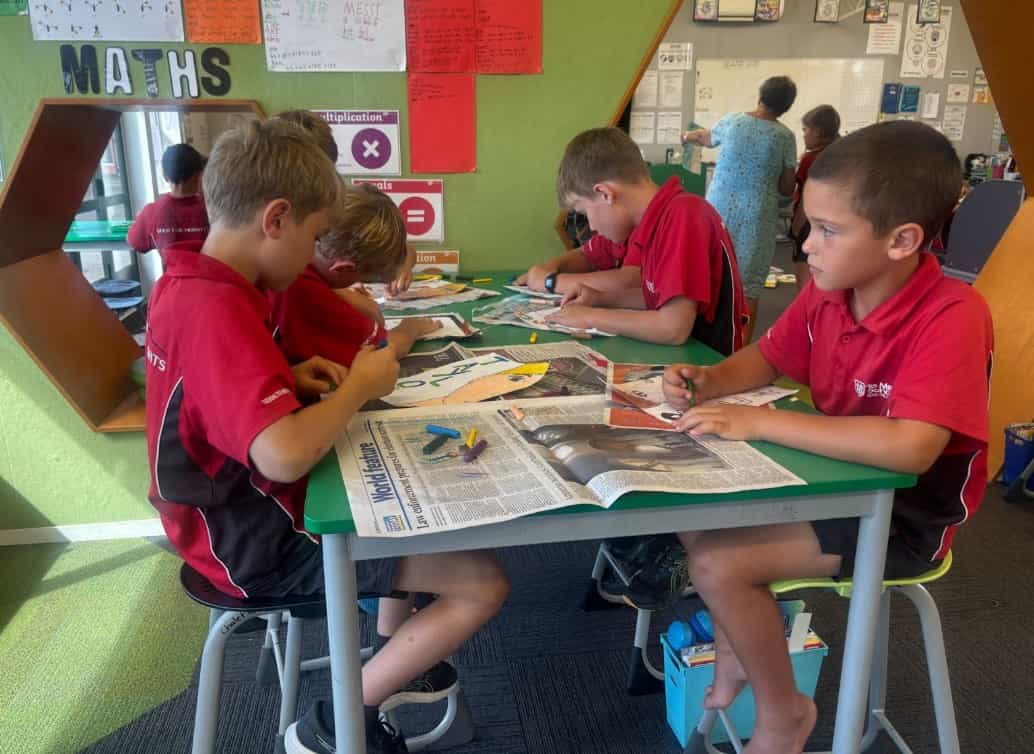
In our composite, collaborative classrooms, both teachers and students see clear benefits—children proudly describe how learning feels supportive, engaging, and personalised. Groupings are based on learning needs rather than age, fostering academic growth, social development, leadership, and empathy. With multiple teachers working closely together, students gain different perspectives and consistent support, even during staff absences. Whether tackling rich maths tasks, buddy reading, or science, learners are encouraged to think deeply, collaborate widely, and grow as independent, thoughtful individuals. As ERO noted (2024 - Te Mata School Review), our teachers know their learners well and design purposeful, evidence-based programmes that reflect the depth of professional development undertaken—setting the school up for continued success as the curriculum evolves.
Education Review Office stated:
"Te Mata is a school built on strong values of support and collaboration. Where teachers, parents and the community clearly play a vital role here together, creating wonderful opportunities and a deep sense of belonging for their children."
If you’d like to know more:
👉Te Mata School ERO Report 2025
👉 Te Mata School Strategic Plan
👉 Learning Story: Learning Through Inquiry
👉 Learning Story: Learning To Learn
Article added: Monday 31 March 2025